
Motherboards AMD
Refine Search

Asrock A520M-HVS AMD Ryzen 5000 Series Socket AM4 mATX Motherboard
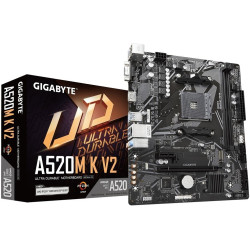
Gigabyte AMD A520M K V2 AMD Ryzen 5000 Series Socket AM4 mATX Motherboard

MSI A520M-A Pro AMD 3rd Gen Socket AM4 mATX Motherboard
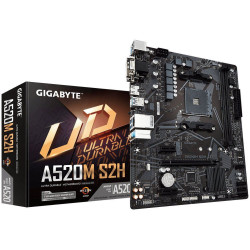
Gigabyte A520M S2H A520 Chipset AMD Ryzen AM4 Socket Motherboard
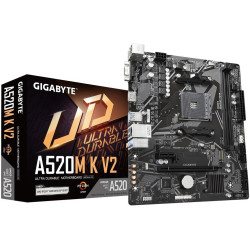
Gigabyte AMD A520M K V2 AMD Ryzen 5000 Series Socket AM4 mATX Motherboard

Gigabyte B550M K AMD Ryzen 5000 Series Socket AM4 ATX Motherboard

Asus PRIME A520M-K A520 Chipset AMD AM4 Socket Motherboard

Gigabyte A620M H AMD A620 AMD Ryzen AM5 Socket Micro ATX Motherboard
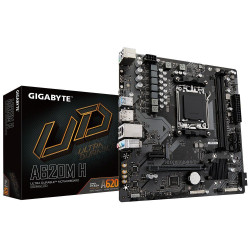
Gigabyte A620M H A620 Chipset AMD Ryzen AM5 Socket Micro ATX Motherboard
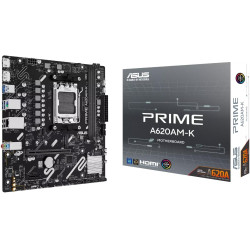
Asus Prime A620AM-K AMD Ryzen 7000 / 8000 / 9000 Series Socket AM5 mATX Motherboard

Asus Prime A620AM-K AMD Ryzen 7000 / 8000 / 9000 Series Socket AM5 mATX Motherboard

MSI Pro A620AM-B Evo AMD Ryzen 7000 / 8000 / 9000 series Socket AM5 mATX Motherboard
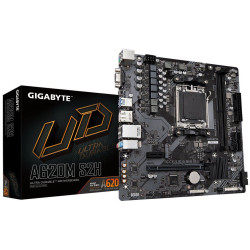
Gigabyte A620M S2H A620 Chipset AMD Ryzen AM5 Socket Micro ATX Motherboard

Gigabyte B840M D2H B840 Chipset AMD Ryzen AM5 Socket Micro ATX Motherboard
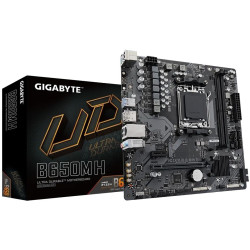
Gigabyte B650MH AMD Ryzen 7000 Series Socket AM5 mATX Motherboard

Gigabyte B650M S2H AMD Ryzen 7000 Series Socket AM5 mATX Motherboard
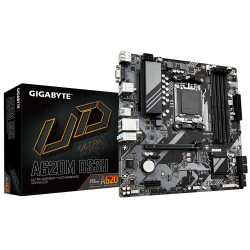
Gigabyte A620M DS3H AMD A620 AMD Ryzen AM5 Socket Micro ATX Motherboard
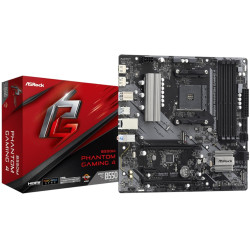
Asrock B550 Phantom Gaming 4 AMD Ryzen 5000 Series Socket AM4 mATX Motherboard

Gigabyte B840M D2h AMD Ryzen 7000 / 8000 / 9000 Series Socket AM5 mATX Motherboard

ASUS PRIME B550M-K ARGB AMD Ryzen 5000 Series Socket AM4 ATX Motherboard
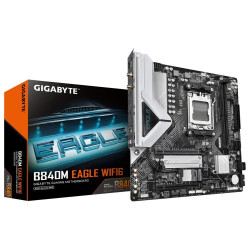
Gigabyte B840M EAGLE WIFI6 B840 Chipset AMD Ryzen AM5 Socket Micro ATX Motherboard
AMD Motherboards: An Overview & Buying Guide
AMD motherboards are the core platform for building a desktop PC powered by AMD processors. They connect and manage all the major components - CPU, memory, storage, graphics, networking, and peripheral ports - ensuring every part of your system works together smoothly. Choosing the right AMD board can improve performance, stability, and future upgrade options.
What a Motherboard Does
The motherboard is the main printed circuit board (PCB) inside your PC. It allows the processor, RAM, storage devices, expansion cards, and connected peripherals to communicate effectively. Modern AMD motherboards integrate advanced features such as high-speed USB, wired and wireless networking, quality onboard audio, and M.2 NVMe storage slots, while UEFI firmware provides configuration and update options.
Form Factors (Will It Fit Your Case?)
ATX: Full-size boards with the most expansion slots, ideal for performance builds and future-proofing.
Micro-ATX: Compact and cost-effective while still offering a solid mix of features for most users.
Mini-ITX: Smallest standard form factor, great for space-saving builds with one primary expansion slot.
Key Features to Compare
Memory (RAM)
Check the supported memory type, speeds, and total capacity. Ensure there are enough DIMM slots for your upgrade plans.
Storage
Look for multiple M.2 NVMe slots for high-speed SSDs and SATA ports for additional storage drives. Many boards include heatsinks to keep M.2 drives cool.
Expansion (PCIe)
Ensure the board has a full-length PCIe x16 slot for a graphics card and any additional slots you may need for capture, sound, or network cards.
Networking
Most AMD boards feature built-in Ethernet, with many adding Wi-Fi and Bluetooth. Choose the speed and wireless standard that suits your needs.
Rear & Front I/O
Review USB port count (Type-A and Type-C), audio connections, and video outputs if you plan to use integrated graphics.
Power Delivery & Cooling
Strong VRMs and well-designed heatsinks help ensure stable performance, especially with higher-end CPUs or under heavy workloads.
Firmware & Updates
Look for boards with user-friendly UEFI interfaces, recovery features, and straightforward BIOS update methods.
Aesthetics & Build Extras
Consider extras like RGB lighting, reinforced slots, pre-installed I/O shields, and efficient cable management layouts for cleaner builds.
Integrated vs. Discrete Graphics on AMD
AMD CPUs with integrated graphics are called APUs (such as the Ryzen series with Radeon Graphics). If your CPU does not include integrated graphics, a discrete graphics card is required for display output.
How to Choose the Right AMD Motherboard (Quick Checklist)
- Match the board size to your case: ATX, Micro-ATX, or Mini-ITX.
- Confirm CPU compatibility via the manufacturer’s CPU support list.
- Check memory type, speed support, and number of DIMM slots.
- Plan your storage setup with the right mix of M.2 and SATA ports.
- Ensure enough PCIe slots for your GPU and any extra cards.
- Review connectivity options: USB count, networking, Bluetooth, and audio.
- Look for strong VRM design and adequate cooling solutions.
- Prefer boards with easy BIOS update features and clear documentation.
Frequently Asked Questions
Do all AMD motherboards support all AMD CPUs? No. CPU support depends on the socket type and BIOS version - always check the official support list.
Can I reuse my old RAM? Only if the motherboard supports the same type and form factor. DDR4 and DDR5 are not interchangeable.
How many drives can I connect? This depends on the available M.2 and SATA ports. Count your current and future storage needs before buying.
Ready to Build?
Browse AMD motherboards by form factor, memory support, storage options, expansion capabilities, and connectivity. For more details on socket and chipset compatibility, visit our dedicated categories or contact us for tailored advice.